
 TR
 EN

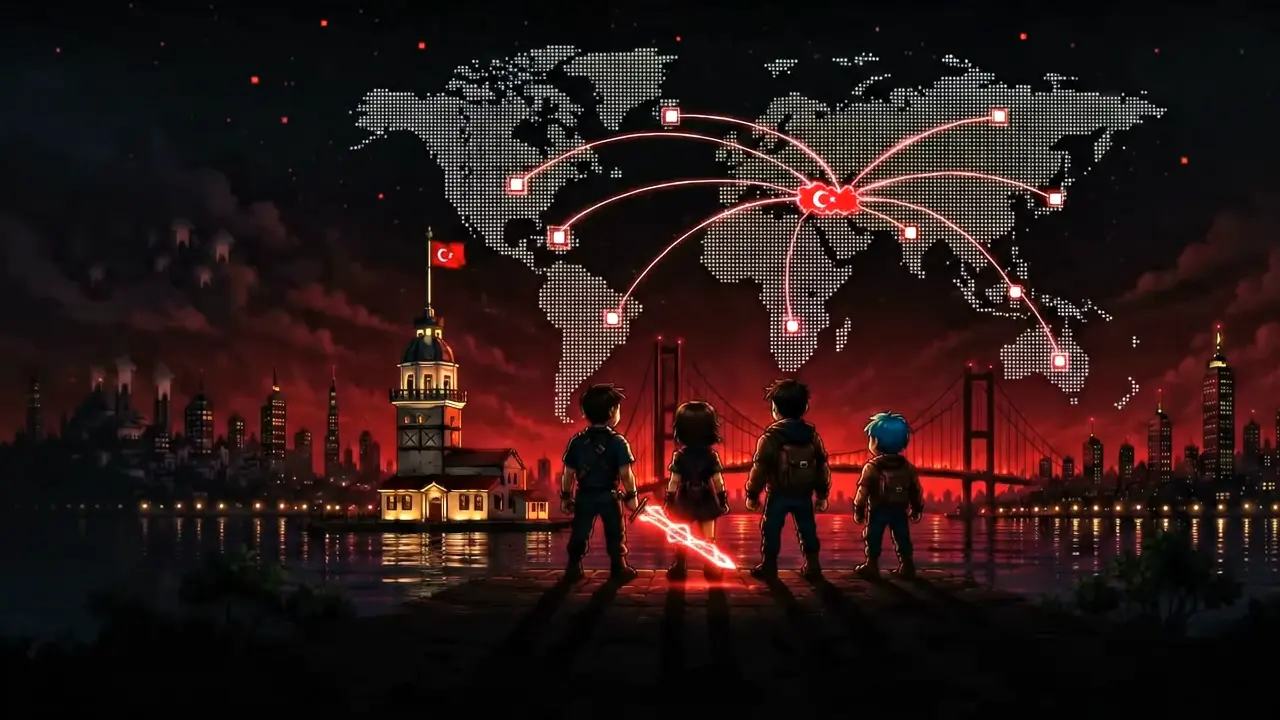
The New Compass of the Gaming Ecosystem: Türkiye Gaming Cluster
As Türkiye’s potential in the gaming industry grows exponentially day by day, transforming this dynamic structure into sustainable success makes strategic collaborations imperative. We conducted a comprehensive interview with Assoc. Prof. Dr. Muhammed Kasapoğlu, General Manager of Entertech İstanbul Teknokent and also serving as the Cluster Coordination of the Türkiye Gaming Cluster, shedding light on the sector’s present, its future, and the new clustering vision that will transform the ecosystem.
Assoc. Prof. Dr. Kasapoğlu examines the sector’s critical topics, from the gaming world to intellectual property, from strategies for opening up to the global market to cultural export.
“Clustering Is an Area of Economic and Intellectual Synergy”
We would like to begin our conversation with Assoc. Prof. Dr. Muhammed Kasapoğlu with one of the fundamental building blocks of the ecosystem, namely “clustering.” From a sectoral perspective, what exactly does this concept mean?
In its simplest form, we can define clustering as a strong economic and intellectual environment formed by actors who work in the same field and complement one another. When we consider a multidisciplinary field like the gaming sector, the boundaries of this circle are quite wide and colorful. Game studios, publishers, investors, technology and service providers, universities, technology development zones, and public institutions are indispensable parts of this ecosystem.
I would particularly like to emphasize that the Türkiye Gaming Cluster was established under the Clustering Support Program of our Ministry of Industry and Technology. Our Ministry is so aware of the potential the gaming sector carries for our country’s economy and digital transformation, and attaches such great importance to this issue, that there is even a dedicated Clustering Department that personally follows the processes. Our Ministry’s visionary perspective and such concrete support are the greatest driving force for us in reaching our ecosystem’s strategic goals.
The greatest wealth here is that these actors feed together from a common pool of human resources, solutions, technologies, and market. The development of any component in the ecosystem naturally opens up brand-new business and collaboration doors for the others.
Of course, letting these relationships run spontaneously and in a scattered manner does not always produce efficient results. The clustering effort steps in precisely at this point and places these relationships on a rational and sustainable ground. It brings the sector’s common needs to the table, brings the right stakeholders together around a shared vision, and enables the development of collective projects. In this way, knowledge, experience, and connections within the ecosystem do not remain the monopoly of just a few; they turn into institutional value that all stakeholders benefit from.
“Our Goal Is Not to Leave Relationships to Coincidence”
So what exactly will the newly launched Türkiye Gaming Cluster add to the existing gaming ecosystem? Which chronic problems of the sector do you aim to solve?
In Türkiye, there are extraordinarily talented teams, game-changing initiatives, and very strong institutions in the gaming field. However, until today, these dynamics have generally tried to grow within their own shells or in limited circles. Our clustering model will enable the gaming ecosystem to establish a much more intense and qualified relationship network within itself.
To make it a bit more concrete: the difficulties a studio experiences in the publishing process and the experience it gains are the most valuable roadmap for another studio that will go through similar paths. Or a technology development zone can analyze the common demands coming from companies and carry out pinpoint infrastructure work. Investors find the opportunity to get to know the teams developing games of the quality they are looking for through much more direct and reliable channels. Experts working in critical areas such as intellectual property, marketing, or internationalization can shed their theoretical molds and come into direct contact with the sector’s real needs.
In summary, the greatest contribution of the Türkiye Gaming Cluster will be to bring these relationships into an institutional and organized structure without leaving them to coincidence. We are building an effective digital infrastructure where companies know each other closely, can share their needs transparently, and can reach the most suitable business partners in the shortest time. In this way, the cluster will not remain a title on paper but will become a living network that produces organic and profitable collaborations among its members.
“Getting the Right Information to the Right Person Is the Beginning of Everything”
You frequently mention that communication plays a critical role within this ecosystem. What is the fundamental dynamic that leads you to place communication in such a central position?
Because the most valuable partnerships in the business world begin first with the right information meeting the right people. In a large ecosystem, it is of vital importance to know who specializes in which types of games, which technologies they use, which global market they target, or what kind of strategic partner they are looking for. When this information is not in circulation, two companies that could perfectly complement each other can remain completely unaware of each other even if they are under the same physical or digital roof.
Of course, meetings, workshops, and strong digital networks are the most fundamental tools of this communication. However, what we understand from communication is by no means limited to sending one-sided announcements or bulletins. Members need to get to know each other’s rhythm, come together regularly, and build bonds based on mutual trust over time. As these communication veins within the cluster are strengthened, I have full confidence that spontaneously emerging joint projects, commercial success, and intellectual sharing will also increase exponentially.
“Intellectual Property Is an Inseparable Part of the Game Development Process”
Let us now come to the sector’s most strategic and frequently overlooked area: Intellectual property (IP). Why must intellectual property be one of the clustering’s fundamental working axes in the gaming world?
Because in today’s gaming industry, a game is born from the coming together of countless artistic and technical components like a flawless symphony. The software can be coded from scratch within the company; however, character design can be outsourced to an agency, the game’s music can be licensed, or proprietary systems of other technology companies can be used in the infrastructure. When the end user, that is, the player, looks at the screen, they see only a monolithic entertainment product; but from a legal and commercial perspective, the owner, the scope of rights, and the terms of use of each element are completely different.
That is precisely why intellectual property is a vital business competency that game companies must develop collectively. The aim here is not limited to filing trademark or design registration applications with a purely protective reflex. The company must know exactly which legal rights it holds in the project it develops, clarify under which licensing terms it integrates content obtained from outside, and enter future publishing, investment, or global licensing agreements with flawless legal preparation.
As a cluster, we will raise the collective awareness level of the entire ecosystem by ensuring that our companies reach qualified information through the shortest path.
In practice, what should studios take into consideration in order to position the intellectual assets they hold correctly?
The game’s name, logo, source codes, characters, the universe’s story, visual designs, musical infrastructure, and studio-specific technologies must all be handled meticulously within this scope. Likewise, the licensing terms of third-party software or music integrated from outside cannot be overlooked.
It must not be forgotten: there is no one-size-fits-all protection recipe for every game and every studio. Depending on the game’s genre, the business model it adopts, and the geographical markets it targets, different legal instruments such as trademark registration, copyrights, industrial design, patent, or trade secrets must come into play. The cluster’s greatest mission at this point is to enable companies to “ask the right questions at the right time” and to serve as a bridge to the high-level expertise they need.
“The Key to Opening Up to the Global Market: Legal Clarity and IP Power”
How do you establish such a direct connection between intellectual property management and games opening up to the global market?
When an international publisher or a corporate investor sits at the table, they do not only look at how fun or mechanically flawless the game is. They also meticulously examine who legally holds the rights regarding the commercial use of that game. If there is the slightest uncertainty or risk of third-party claims over the game’s name, characters, visual world, or music, this situation instantly blocks even the most brilliant publishing and investment negotiations.
A studio that has clarified its ownership architecture from the very beginning acts much more strongly, confidently, and advantageously at critical tables such as which countries it will publish in, which platforms it will appear on, license duration, and revenue sharing. Moreover, it can carry the successful character, game universe, or technology it has created to different projects, side products (merchandising), or film/series adaptations in the future. For this reason, intellectual property management and access to the global market can never be considered independent of each other. This unwavering strategic bond is the fundamental reason why our cluster merges these two areas in a single pot.
“Games Are Powerful Tools of Cultural Export”
In recent years, we see that games produced in Türkiye are making a resonance in the world. How do you evaluate the position and potential of games in “cultural export”?
A game is one of the most inclusive and impressive forms of expression humanity has developed. The player is not a passive viewer; they are the very subject of the constructed world. They move together with the characters, make strategic decisions, explore new places, and establish a long-term bond with that world’s music, humor, aesthetic language, and philosophy. This bond makes games unique tools capable of carrying cultural codes to the most remote corners.
We cannot see cultural export merely as directly patching motifs from our history or local symbols into the game. A game’s perspective on human relations, the language of humor it uses, its rhythm, its narrative construction, and the universe it builds also whisper the traces of the culture in which it was born. When an original production designed in Türkiye reaches the screens of players around the world, the cultural perspective that production carries also enters global circulation.
Here again, the reality of intellectual property confronts us. If the rights of an original character, story, or universe born in our country are protected according to international standards, this value will grow like a snowball over time, evolve into different channels, and turn into a permanent global brand. We read cultural export as the inevitable result of the organic success of qualified and visionary games in the global market.
“We Define Success by Our Criteria”
Let us conclude our conversation with a vision for the future. Through which indicators will we understand that the Türkiye Gaming Cluster has reached its goals and has been fully successful?
Our clearest indicator will be the practical counterparts in the field. If a game studio reaches the international publisher, qualified investor, intellectual property expert, or global business partner it needs much more easily and confidently than before through the network offered by the cluster, this means the system is working flawlessly.
When we create a climate in which our members know each other’s competencies by heart, produce synergistic projects with collective wisdom, and share the knowledge they hold generously, we will have built a true clustering culture.
At the end of the day, the picture we want to see is quite clear: to create an ecosystem in which uninterrupted and transparent communication is established between companies, intellectual property management has become a natural and indispensable part of the game development process in every studio, and original games born in Türkiye exist on the world stage with a much stronger voice. The Türkiye Gaming Cluster will be the strongest carrier of this great vision. All our stakeholders who want to be a part of this ecosystem and join us in this transformation can reach us via www.turkiyeoyunkumelenmesi.com to get involved.
Source: Capital